
Reclaiming Your Focus: Overcoming Screen Fatigue and Digital Eye Strain for a Productive Tennessee Fall

As fall routines pick up across Tennessee, many people are spending more time on laptops, phones, tablets, and other digital devices for work, school, and everyday tasks. That extra screen time can leave your eyes feeling tired before the day is over. At Primary Eye Care of Arlington & South Main, we help patients in Arlington and Memphis identify the causes of screen fatigue and find practical ways to improve visual comfort.
What Digital Eye Strain Can Feel Like
Digital eye strain, also called computer vision syndrome, can develop when your eyes work for long periods at a screen without enough rest. Symptoms may include blurred vision, dry or irritated eyes, headaches, difficulty refocusing, and tired eyes. Neck or shoulder discomfort can also occur when you change your posture to compensate for visual discomfort.
These symptoms are not always caused by screen use alone. An outdated prescription, dry eye, focusing problems, or difficulty with the eyes working together can make long workdays and study sessions more uncomfortable.
Simple Ways to Reduce Screen Fatigue
Small changes to your daily setup can make screen use easier on your eyes. Try to:
- Follow the 20-20-20 rule by looking about 20 feet away for 20 seconds every 20 minutes
- Blink more often to help keep the eye surface comfortable
- Position your monitor at a comfortable distance and slightly below eye level
- Reduce glare from windows and overhead lighting
- Increase text size instead of leaning closer to the screen
- Take regular breaks during long stretches of computer work
These habits can be especially helpful as Tennessee students and professionals settle into busier fall schedules.
When Screen Fatigue Points to Something More
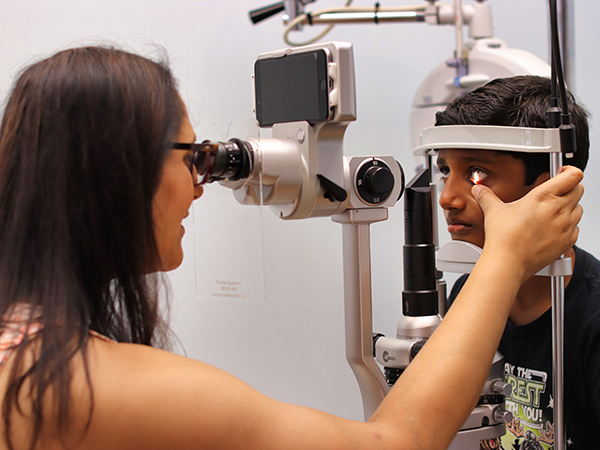
If headaches, blurred vision, burning, dryness, or eye fatigue continue even after adjusting your screen habits, it may be time for a comprehensive eye exam. We can check your prescription, eye health, focusing ability, and how well your eyes work together.
For some patients, digital discomfort may be connected to binocular vision problems. Our practice offers Neurolens, which may help certain patients whose eye alignment issues contribute to headaches, eye strain, or neck discomfort during reading and digital device use.
Dry eye can also make screen time harder. Because people often blink less frequently while concentrating on a device, the tear film can become less stable. Our Arlington and Memphis offices provide dry eye evaluations and personalized treatment options when ongoing dryness is part of the problem.
Eyewear Designed for Digital Work
The right lenses can also improve comfort during long hours at a computer. Primary Eye Care offers computer and office lens options for patients who need clear near and intermediate vision, along with premium anti-reflective coatings that can reduce distracting glare. Eyezen single-vision lenses are another option designed for digital devices and everyday visual tasks.
A personalized recommendation starts with understanding how you use your eyes throughout the day. Your work distance, prescription, screen habits, symptoms, and overall eye health can all help determine which approach makes sense.
Schedule your fall comprehensive eye exam with Primary Eye Care of Arlington & South Main in Arlington, TN at (901) 867-5540 or Memphis, TN at (901) 979-9879 and take the first step toward clearer, more comfortable screen time this season.


Arlington Office
Contact Information
Office Hours
- Monday 8:00 AM - 5:00 PM
- Tuesday 8:00 AM - 5:00 PM
- Wednesday 8:00 AM - 5:00 PM
- Thursday 8:00 AM - 5:00 PM
- Friday 8:00 AM - 12:00 PM
- Saturday Closed
- Sunday Closed
Memphis Office
Contact Information
Office Hours
- Monday Closed
- Tuesday By Appointment
- Wednesday By Appointment
- Thursday By Appointment
- Friday 8:00 AM - 5:00 PM
- Saturday 9:00 AM - 12:00 PM
- Sunday Closed
© 2026 Primary Eye Care of Arlington & South Main. All rights Reserved. Accessibility Statement - Privacy Policy - Sitemap
Managed and Designed by:
