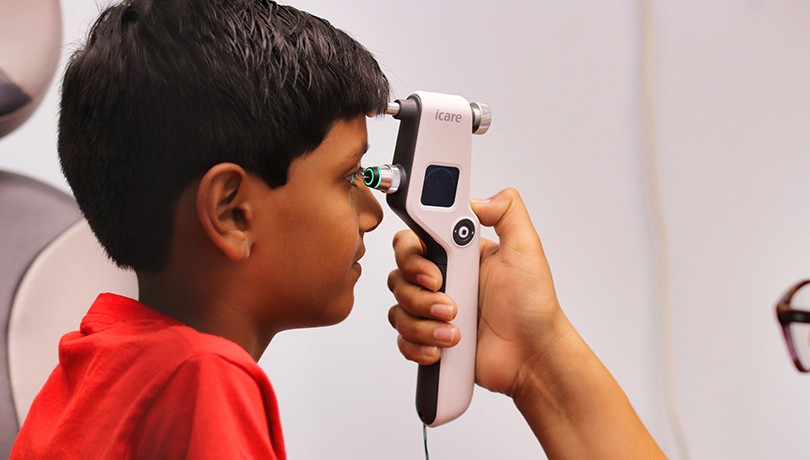
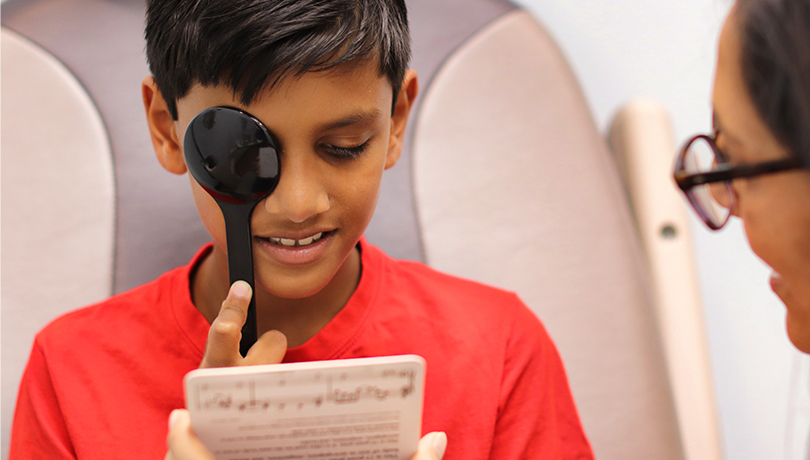
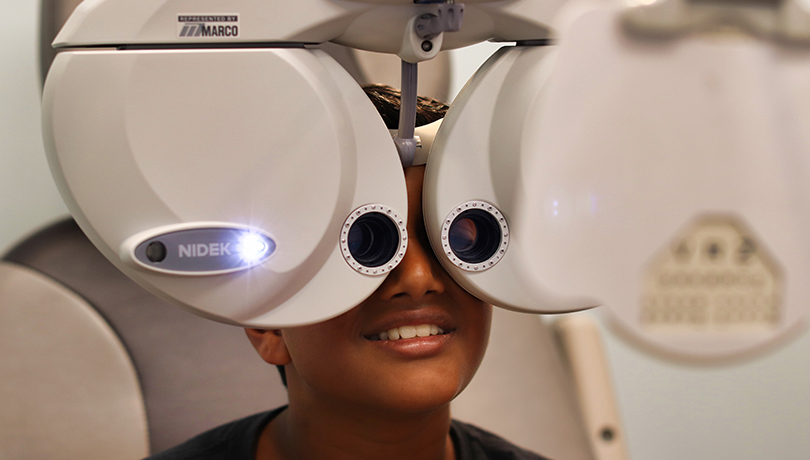
Children need regular eye exams to keep their eyes healthy and catch any vision problems that could interfere with school performance. Learning relies heavily on vision, with as much as 80% of classroom learning being visual.² A child’s eye exam ensures they have the visual skills they need to excel in school, including:

Pediatric Eye Exams
Children can have eye health and vision problems without you realizing. A pediatric eye exam helps identify concerns early, allowing your child to receive the right care before issues progress.
Our experienced pediatric eye doctors in Arlington and South Main offer personalized care for kids of all ages. Our optometrists have extensive experience in caring for children’s eyes and can accurately identify and manage a wide range of pediatric vision and eye health concerns.
When should children get a pediatric eye exam?
Children should have their first eye exam at around six months, then again between three and five years old, and once more before first grade.¹
Once a child is in school, they should have a comprehensive eye exam at least once every year or as recommended by their optometrist.¹
What to expect during a kid’s eye exam
The specific tests may vary by age and risk factors, but every pediatric eye exam includes:
Reviewing your child’s eye health and medical history
Testing visual clarity at distance and up close
Checking eye alignment and how the eyes work together
Evaluating eye health
Determining whether glasses are needed and prescribing them when appropriate
- Assessing the need for myopia management to help slow the progression of nearsightedness
Why are eye exams important for children?
Excellent vision for up close and far away
Proper eye teaming, allowing both eyes to work together and focus on the same point
The ability to smoothly shift focus between near and far objects
Strong eye movement skills, such as tracking across a line of text while reading
What are the signs of vision problems in children?
Kids don’t always recognize when something is off with their vision, so they may be struggling to see clearly without it being obvious. If left untreated, these vision issues can affect your child’s development and daily life. Watch for these early signs of vision problems in children:
Frequent blinking, squinting, or irregular eye movements
Frequently turning or tilting their head
Covering or closing one eye to see better
Poor hand-eye coordination or motor skills
Rubbing their eyes frequently
Frequent headaches
Leaning in too close to see something or read
Learning difficulties and poor handwriting
If you notice any of these behaviors, it could be a sign of a vision or eye health concern. We recommend scheduling a pediatric eye exam at our Arlington or South Main location so we can determine what’s going on and recommend treatment. Addressing concerns early can help prevent more serious or long-term issues, depending on the condition.
Comprehensive pediatric eye exams at Primary Eye Care
Pediatric eye exams at Primary Eye Care of Arlington and South Main detect eye defects and vision impairment while also assessing your child’s risk for developing eye conditions later in life. Our exams are more thorough than those offered at the pediatrician’s office or schools, which screen for potential vision problems but do not diagnose or treat them.
Don’t wait until a vision problem is noticeable! Get your child’s eyes checked regularly by an optometrist. Schedule your child’s eye exam in Arlington or Memphis today.
References:
Can my child wear contact lenses during sports activities?
Yes. We love one day disposable lenses for these situations.
When should my child's eyes be examined?
Children’s vision is developed at six months of age. There are programs (InfantSEE) that help to assess that everything is normal for future development. If all is normal with that examination, the next exam should be at age four.
Will sitting too close to the television set hurt my child's eyes?
Most of the time children sit close to the TV to tune everything else out. It is good to have a good distance between the object we are viewing and our eyes to ensure we are not putting undue stress on our focusing system.
Is my child likely to inherit my need for glasses?
Yes. And likely sooner. We are seeing more kids that are younger with higher prescriptions than their parents had when they were in glasses. The good news is that there are methods to slow this progression down. Talk to your eye doctor about myopia control to help with slowing down progression.
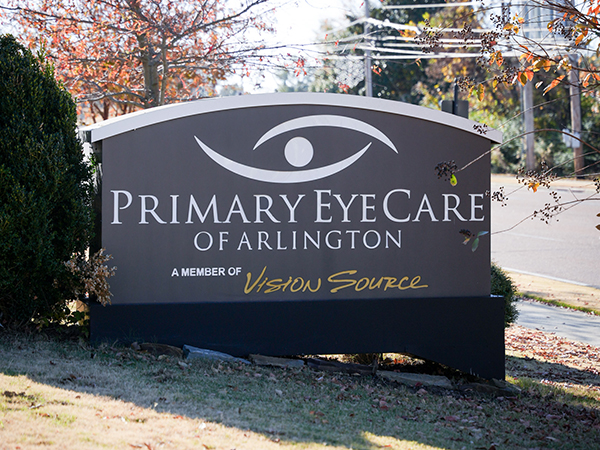

Arlington Office
Contact Information
Office Hours
- Monday 8:00 AM - 5:00 PM
- Tuesday 8:00 AM - 5:00 PM
- Wednesday 8:00 AM - 5:00 PM
- Thursday 8:00 AM - 5:00 PM
- Friday 8:00 AM - 12:00 PM
- Saturday Closed
- Sunday Closed
Memphis Office
Contact Information
Office Hours
- Monday Closed
- Tuesday By Appointment
- Wednesday By Appointment
- Thursday By Appointment
- Friday 8:00 AM - 5:00 PM
- Saturday 9:00 AM - 12:00 PM
- Sunday Closed
© 2026 Primary Eye Care of Arlington & South Main. All rights Reserved. Accessibility Statement - Privacy Policy - Sitemap
Managed and Designed by:
